Tap Water vs. Old Water Filter vs. New Water Filter
One of the gadgets I bring with me on my travels is a universal water filter (the one that attaches to sinks and faucets). It helps provide clean drinking water. Or does it?


Soak the test strip in water for 2 seconds, then match the colors of each tile on the test strip to the matrix on the right
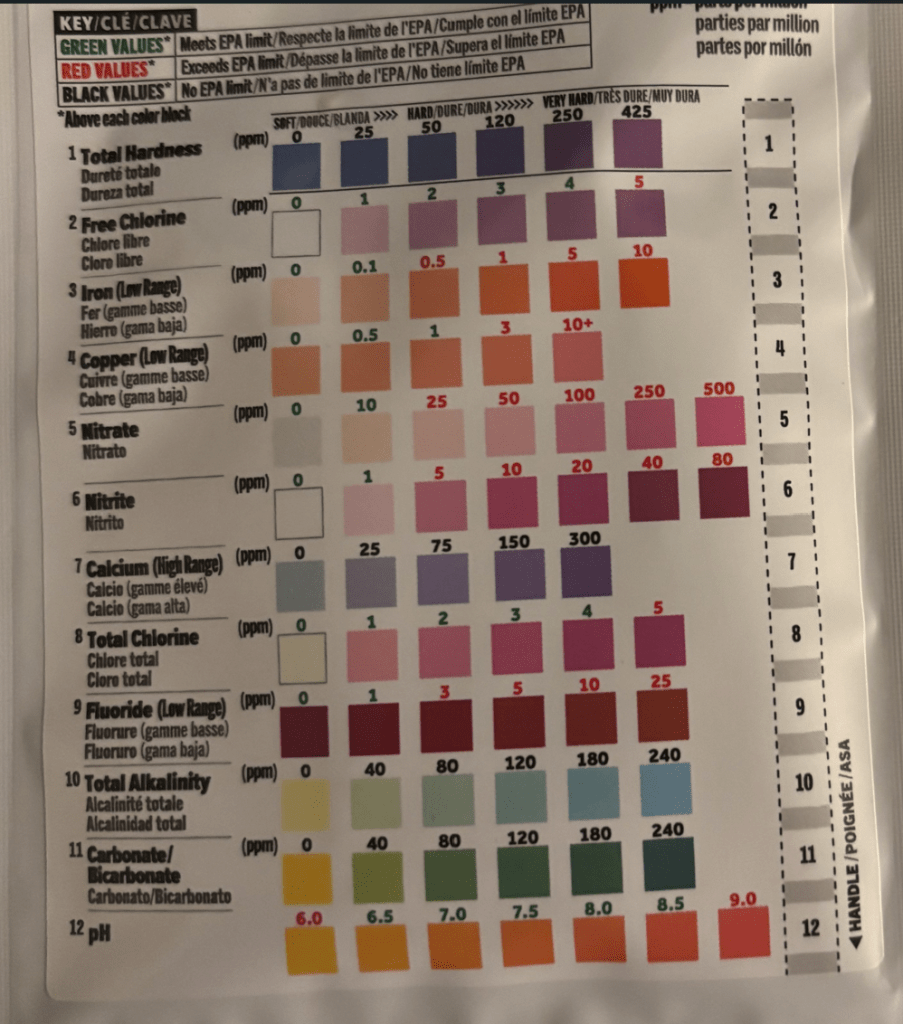
- pH: This tells you how acidic or basic the water is. A pH of 7 is neutral (like pure water). If it is below 7, the water is acidic (like vinegar), and if it is above 7, it is basic (like baking soda).
- Hardness: This measures how much calcium and magnesium are in the water. Hard water has more of these minerals and can cause scaling on faucets and pipes.
- Fluoride: This is often added to tap water to help prevent tooth decay. Too much fluoride though, can cause health problems.
- Nitrate: Comes from fertilizers, animal waste, or decaying plants. High levels in drinking water can be dangerous, especially for babies.
- Chlorine: This is added to kill harmful bacteria. A little is okay, but too much can make the water taste and smell bad.
- Iron: This can come from old pipes or natural sources. High levels can make water taste metallic and stain sinks or laundry.
- Copper: This can leach into water from pipes and plumbing. High amounts can cause stomach problem or leave a blue-green stain on fixtures.
- Total Alkalinity: This measures how much the water can resist changes in pH. If alkalinity is too low, the pH can swing wildly, which can make the water corrosive to pipes. If it’s too high, it can make the water feel flat or taste off.
- Carbonate / Bicarbonate: They work together to stabilize pH levels. If water gets too acidic, bicarbonates neutralize the acid to keep the pH stable; if the water gets too basic, the carbonate helps bring it back down.
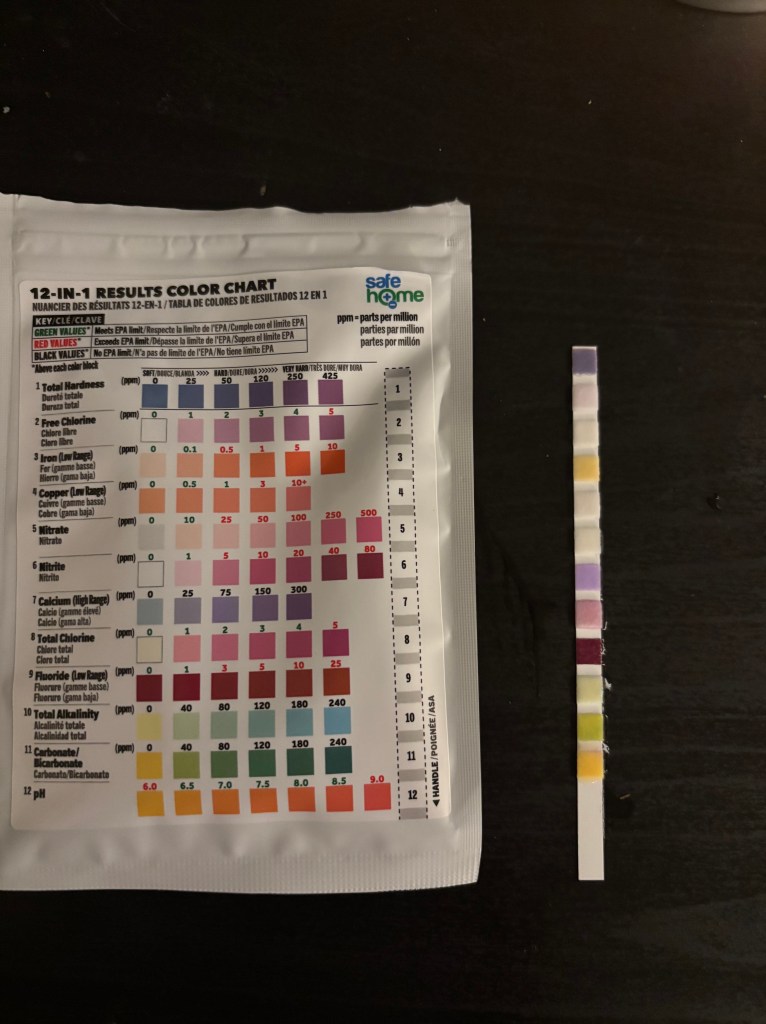
- Total Hardness = 120 ppm (Good)
- Free Chlorine = 1 ppm (Good)
- Iron = TBD (N/A)
- Copper = TBD (N/A)
- Nitrate = 0 ppm (Good)
- Nitrite = 0 ppm (Good)
- Calcium = 75 ppm (Good)
- Total Chlorine = 2 ppm (Good)
- Fluoride = 0 ppm (Good)
- Total Alkalinity = 0 ppm (Good)
- Carbonate / Bicarbonate = 20 ppm (Good)
- pH = 5 ppm (Not Good – Not Within EPA Range)
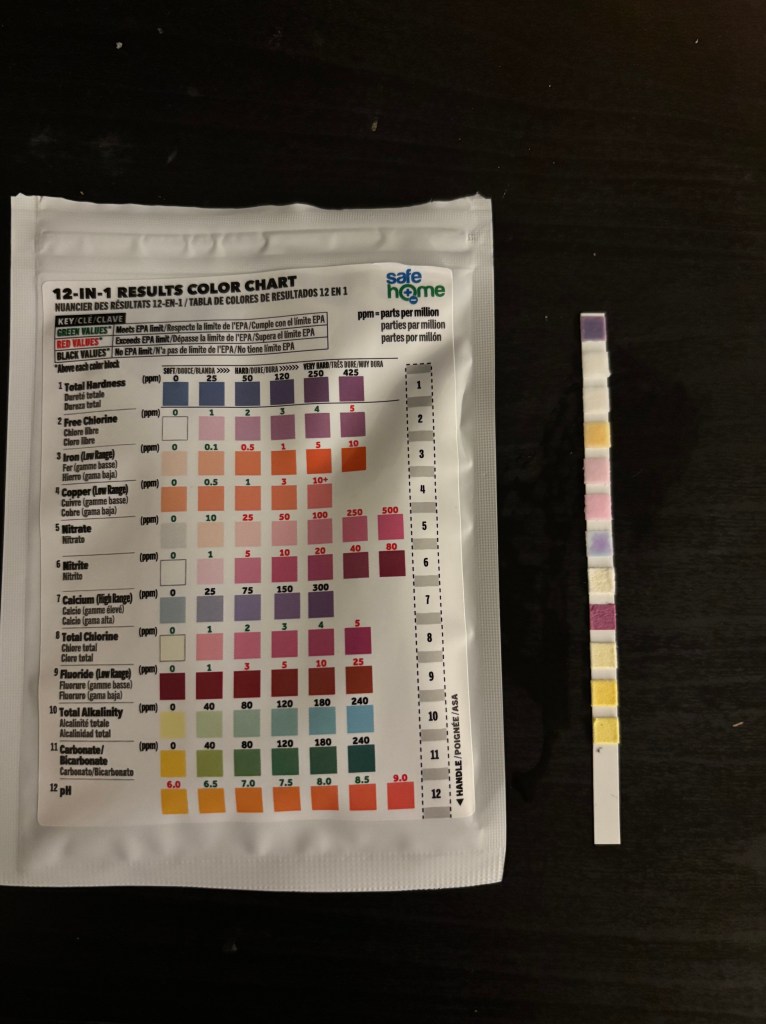
- Total Hardness = 120 ppm (Good)
- Free Chlorine = 0 ppm (Good)
- Iron = TBD (N/A)
- Copper = 0 ppm (Good)
- Nitrate = 50 ppm (Not Good – Exceeds EPA Limit)
- Nitrite = 1 ppm (Good)
- Calcium = 50 ppm (Good)
- Total Chlorine = 0 ppm (Good)
- Fluoride = 25 ppm (Not Good – Exceeds EPA Limit)
- Total Alkalinity = 0 ppm (Good)
- Carbonate / Bicarbonate = 20 ppm (Good)
- pH = 3 ppm (Not Good – Not Within EPA Range)
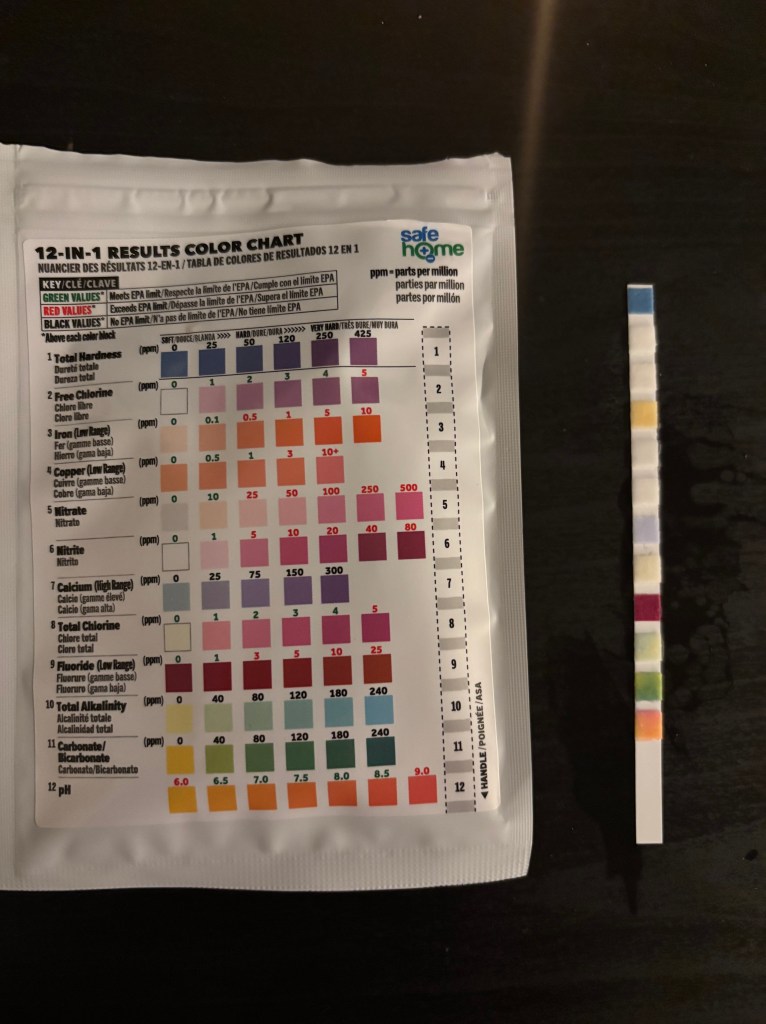
- Total Hardness = 0 ppm (Good)
- Free Chlorine = 0 ppm (Good)
- Iron = 0 ppm (Good)
- Copper = 0 ppm (Good)
- Nitrate = 0 ppm (Good)
- Nitrite = 0 ppm (Good)
- Calcium = 0 ppm (Good)
- Total Chlorine = 0 ppm (Good)
- Fluoride = 0 ppm (Good)
- Total Alkalinity = 40 ppm (Good)
- Carbonate / Bicarbonate = 50 ppm (Good)
- pH = 6.5 ppm (Good)
Conclusion:
- Tap Water: Generally good results, pH level of 5 is a bit low.
- Old Water Filter: High levels of nitrate (50 ppm) and fluoride (25 ppm) and a pH level of 3.
- New Water Filter: Best results.
 zeroknowledge